Use this guide to choose a launch and shape the day, then follow current Arizona boating rules, onsite signs and any direction from ramp or law-enforcement staff.
Choose a launch ramp for the actual plan
Site Six is the only free municipal public launch, but free does not always mean fastest or most convenient. State-park ramps and marina facilities may provide a better starting point based on lodging, destination, parking needs and current congestion. Fees, hours and temporary restrictions change, so verify the ramp before towing across town.
Arrive with the boat prepared away from the active lanes: plugs installed, straps managed, safety equipment aboard and passengers briefed. Use the launch lane for launching, not for loading coolers or organizing gear.
Ramp choice should account for tow length, parking, fees, operating hours and where the boat will be at the end of the day. A ramp that looks closest on a map may be the wrong fit when an event, wind direction or parking limit changes the routine.
Bridgewater Channel and no-wake operation
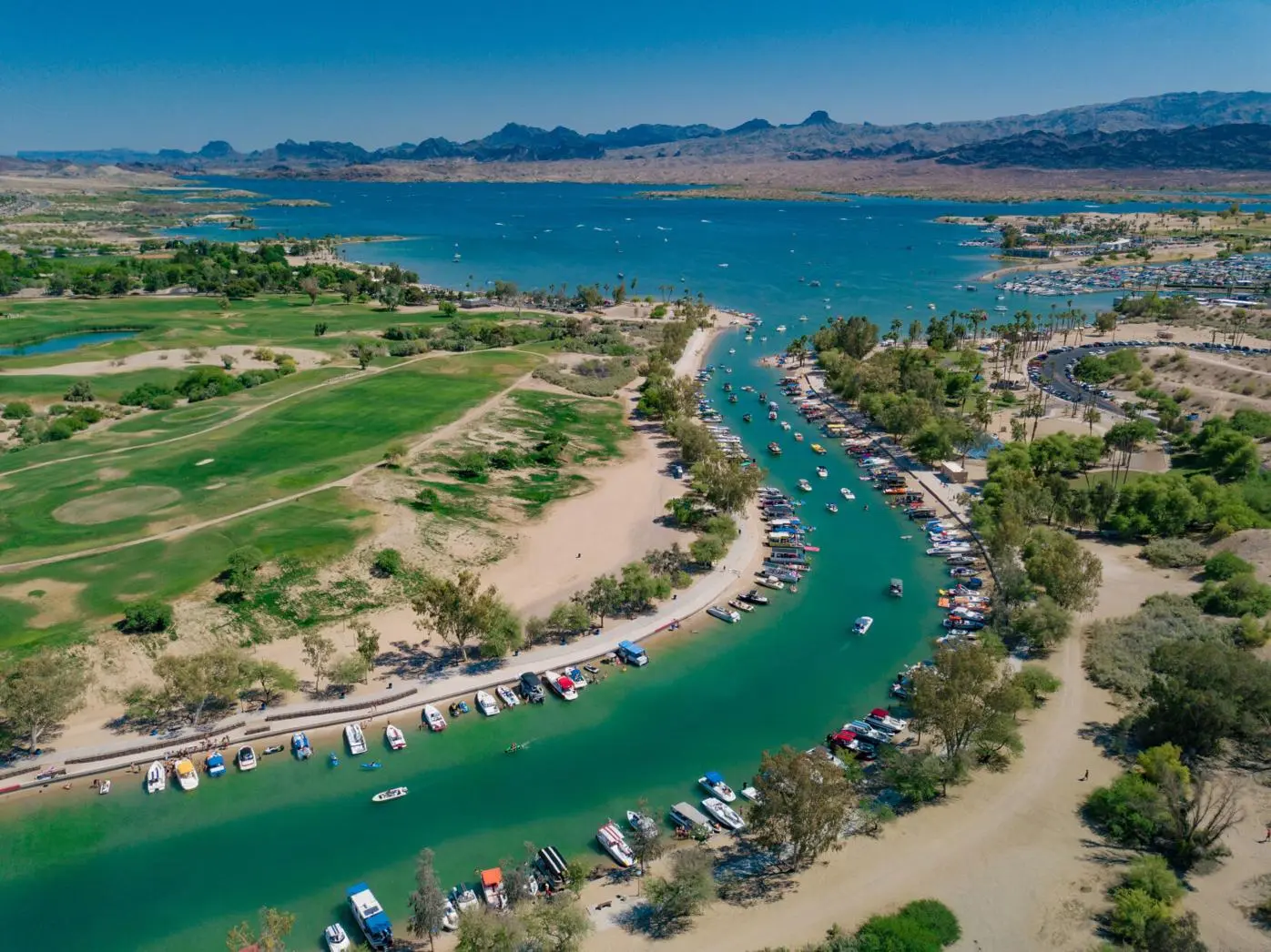
Bridgewater Channel is a high-traffic, 5 mph/no-wake zone with specific circulation, stopping and vessel-size rules. Keep right and follow posted direction. Do not stop, swim or moor overnight in the navigation channel.
The Bridgewater Channel guide explains the area's land-side access and the rules that affect a visit. Operators remain responsible for reading current signs and official regulations.
Treat the Channel as a transportation corridor with beaches and businesses beside it—not as open-lake water. Watch the posted circulation pattern, maintain steerage without creating wake and keep swimmers out of the navigation lane.
Weather, distance and fuel
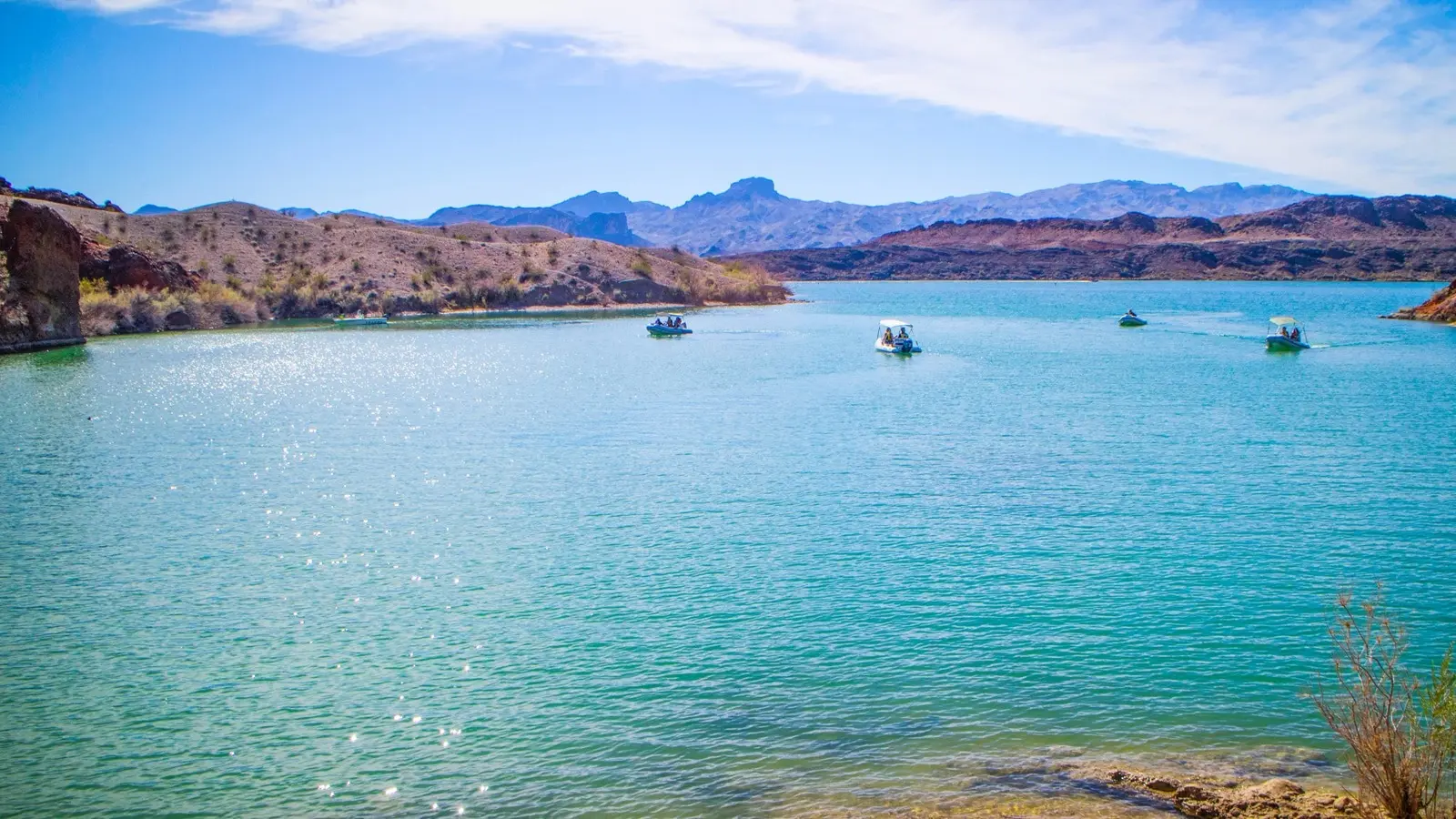
Lake conditions can change quickly when wind rises. Check the marine-relevant forecast, watch the sky and choose a route that fits the boat and operator. A destination that is comfortable in calm water may be a difficult return trip into wind and chop.
Calculate fuel for the round trip with a reserve. Cell service is not a substitute for float-plan information, navigation awareness or required safety gear. Tell someone where you are going and when you expect to return.
Build the return leg before the outbound leg. Fuel reserve, afternoon wind and daylight all matter more when the boat is farther from a protected ramp or marina; a conservative turnaround is part of the itinerary, not a failed day.
Safety and invasive-species responsibilities
Confirm properly sized life jackets, navigation lights, fire extinguisher requirements and operator rules before launch. Designate a sober operator. Arizona requirements differ by vessel type, age and activity, so use the current official guidance rather than a copied equipment list.
Clean, drain and dry boats and gear to reduce the spread of aquatic invasive species. Follow current inspection or decontamination instructions when moving a watercraft between waters.
Life jackets must fit the people who may need them, not simply exist somewhere onboard. Confirm the fire extinguisher, sound device, navigation lights, registration and operator responsibilities before launching, then complete any invasive-species steps required for the boat and destination.
No boat? Choose a tour or rental that fits the day
Visitors can compare narrated boat tours, sunset cruises and current rental businesses. Ask what safety equipment is included, where the operator allows the vessel to go and what happens if wind cancels the reservation.
A rental agreement does not teach local navigation. First-time operators should choose a conservative route and obtain an in-person orientation before leaving the dock.
A captain-operated tour is the simplest no-experience option. A rental shifts navigation, docking, fueling and weather decisions to the renter, so ask exactly what training, insurance, damage authorization and geographic limits apply before signing.
Make the plan work
Build the boat day from the ramp backward
The most useful Lake Havasu boat plan starts with the launch, return window and operator’s real experience. Once those are settled, the Channel, coves, lighthouses and open-lake stops become much easier to choose.
Compare the current ramps
Check fees, hours, parking and the likely traffic pattern for the chosen day. Holiday weekends and major boating events deserve an earlier arrival and a second ramp plan.
Use the HavasuLew launch-ramp guideRun the safety check before towing
Confirm required equipment, operator responsibilities, fuel range and the day’s wind. Do not let the first safety conversation happen while the boat is blocking the ramp.
Read the HavasuLew boating-safety guideUse a captain when that fits better
Visitors who want the scenery without operating, anchoring or docking should compare captain-operated tours. Ask about the exact route, vessel, shade, restroom and weather policy—not just the word “tour.”
Compare Lake Havasu boat toursCheck the day, not the monthly average
Lake Havasu City weather
Heat and wind can change the safest time, route and backup plan. Check the live Lake Havasu forecast here, then use the managing agency or operator for closures, launch conditions and activity-specific rules.
Read how hot Lake Havasu gets in summer
Your question, answered
Boating frequently asked questions
Where can I launch a boat in Lake Havasu City?
Site Six is the free municipal public ramp. State parks and marinas have additional ramps with their own fees, hours and access rules.
What is the speed limit in Bridgewater Channel?
Bridgewater Channel is a 5 mph/no-wake area. Follow current signs and the channel's specific circulation and stopping rules.
Do I need a boating license in Arizona?
Arizona requirements depend on the operator, vessel and activity. Check the current Arizona Game and Fish boating rules before operating instead of relying on a simplified yes-or-no answer.
Can I rent a boat without local experience?
Rental businesses set their own requirements. Ask for a full safety and navigation orientation and choose a conservative route that matches your experience.
Check before you go
Current details from the source